Meaningful mathematics discourse isn’t just about what instructors do, but it’s also about how students take up the invitation to learn. For their final article in the series, “Listening to Students: How Adult Learners Make Sense of Mathematics Discourse,” which focuses on mathematics discourse in adult basic education (ABE) classrooms, Brent E. Jackson, PhD (WestEd) and Haley McNamara (WestEd), turn the spotlight on adult learners, asking them to reflect on the classroom practices that made the greatest impact on their learning.
Using video-cued interviews, researchers invited Adult Numeracy in the Digital Era (ANDE) learners to watch classroom clips and share what they noticed. Their responses reveal a powerful message: students recognize, appreciate, and benefit from classrooms where discussion, collaboration, and reasoning are at the center of learning.
Three Lessons from Adult Learners
1. Explanation Enhances Understanding
Students consistently described the value of explaining their reasoning and hearing how others approached the same problem. One learner, Wyonna, appreciated being shown more than one path to a solution, noting that the approach was “teaching me more than one way how to do something.” Rather than focusing on a single correct answer, they appreciated opportunities to compare strategies, make sense of different perspectives, and learn from one another. These conversations helped transform mathematics into a shared learning experience.
2. Participation Takes Many Forms
The learners challenged a common assumption: that participation means always speaking up. Another learner, Gary, described days when listening was the more useful posture, noting that “somedays I know I wasn’t really talking too much.” Gary recognized that some days he talked a lot and other days he did not, and that simply “listening to my peers” in the discussion could be worthwhile in its own right. To them, sometimes contributing to discussion felt right; other times, listening carefully was the most productive way to learn. What mattered most was remaining intellectually engaged and recognizing that learners can contribute to the classroom community in varied ways.
3. Community Makes Learning Possible
One of the strongest themes to emerge was the importance of belonging. Students described classrooms where respectful discussion, collaborative problem-solving, and even laughter helped create an environment where they felt comfortable taking risks. One learner, Quinn, echoed the same sense of ease, describing a class that enjoyed working in groups and an instructor who “knows our personalities” and used that knowledge to decide who to put together. They recognized that a sense of community was intentionally cultivated by their instructors through shared norms, thoughtful facilitation, and opportunities for every learner to contribute.
Why Student Voices Matter
For educators, these reflections offer an important reminder: adult learners notice the instructional moves that support their learning. Even when they’re challenged to explain their thinking or work through productive struggle, they understand the purpose behind those experiences—and they value them. The findings also reinforce the role of ANDE’s Cultivating Inclusive & Resilient Communities of Learners (CIRCL) Supports, which help build the confidence, belonging, and collaborative culture that make rich mathematical discussions possible.
This is a compelling reminder that the best way to understand the impact of our teaching is to listen to the learners themselves. Their voices affirm that when instructors create discourse-rich classrooms they are also building students’ confidence, strengthening their reasoning, and welcoming learners to be active members of a learning community.
Access the full article Listening to Students: How Adult Learners Make Sense of Mathematics Discourse to learn more. This article is the third and final installment in the ANDE mathematics discourse series, published in The Math Practitioner newsletter of the Adult Numeracy Network. To read the full newsletter, you will need to be a member of the Adult Numeracy Network.
The ANDE project is funded by the Institute of Education Sciences in the U.S. Department of Education (Award #R305N210029).
To learn more about ANDE and other research work that Carnegie Math Pathways at WestEd is engaged in, sign up for our In Sum newsletter and visit the ANDE OER website.
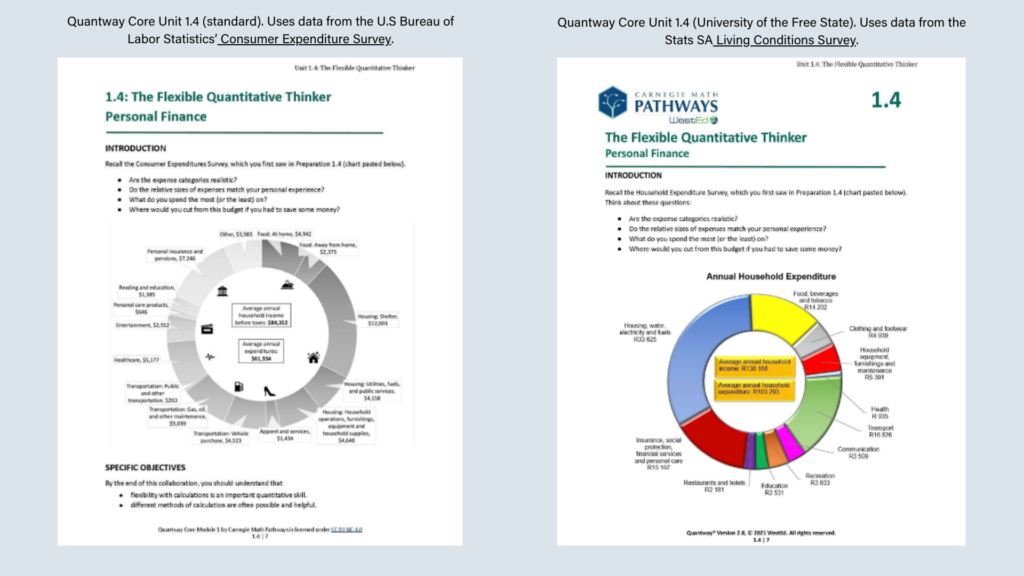 Carnegie Math Pathways’ move to OER helps enhance the accessibility and affordability of Statway and Quantway for students while empowering instructors to modify the curricula to best suit students’ needs and contexts.